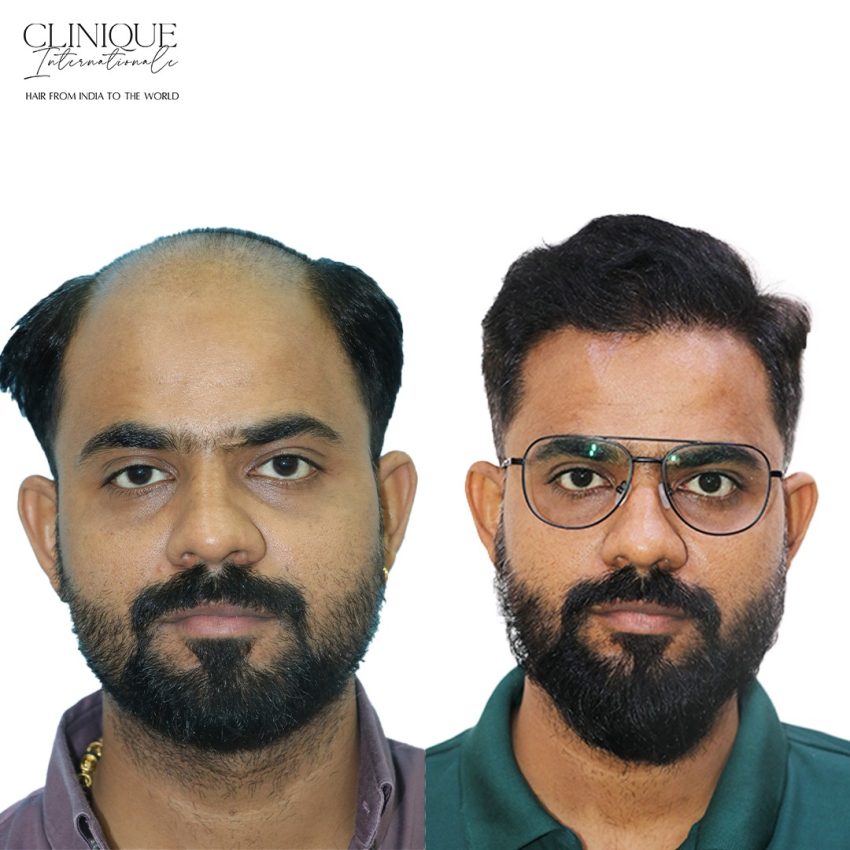
Worli is known for its coastal views, Sea Face promenade, Bandra–Worli Sea Link and mix of modern buildings and historic landmarks. For many men in the area, hair loss becomes noticeable as thinning around the crown. At Clinique Internationale, founded by Hair Transplant Surgeon Dr. Bhavesh Gupta, patients can discuss crown restoration and understand the treatment options available at the clinic’s Kharghar centre.
A Hair Transplant in Worli may be considered by people experiencing significant thinning or hair loss around the crown, also known as the vertex. However, crown restoration requires careful planning because hair in this region grows in a circular pattern. The surgeon needs to consider the direction of the natural hair whorl, the size of the thinning area and the availability of donor follicles.
Unlike the frontal hairline, the crown can require a considerable number of grafts to achieve the desired coverage. Hair loss may also continue to progress, so the treatment plan should account for possible future thinning and preserve donor hair where possible.
Clinique Internationale uses the Sapphire FUE technique for hair transplantation. During consultation, the surgeon examines the scalp and donor area, assesses the crown and discusses the expected coverage, graft requirements and treatment approach.
For patients exploring a Hair Transplant in Worli, understanding how crown restoration differs from frontal hairline treatment can help them make an informed decision. The following guide covers graft planning, density, supportive treatments, recovery and cost considerations.
Getting to Kharghar from Worli
Patients travelling from Worli to Clinique Internationale’s Kharghar centre can consider road travel through the Sewri interchange and Atal Setu. The route and journey duration depend on traffic and the patient’s starting point.
Kharghar is also connected through the Harbour Line, Navi Mumbai Metro and Sion–Panvel Highway. Patients should check current travel conditions before planning their consultation or procedure.
Why the Crown Is Different
The crown, also called the vertex, needs a different approach from the frontal hairline. Three important factors influence its treatment:
- The natural hair whorl
- Hair at the crown grows in a circular or spiral pattern.
- Grafts need to follow the natural direction of growth to create a balanced appearance.
- The size of the treatment area
- A small-looking thinning patch may cover a relatively large area when measured on the scalp.
- The number of grafts required depends on the size of the area and the available donor hair.
- Possible future hair loss
- Crown thinning may continue to progress over time.
- The treatment plan should consider future changes and the need to preserve donor hair.
How Much Coverage Looks Natural?
The crown is often viewed from above, particularly under bright or overhead lighting. This makes the direction, distribution and density of transplanted hair important when planning the procedure.
Natural scalp hair density varies between individuals. A transplant does not necessarily need to reproduce the original density to create a balanced appearance. The surgeon assesses the existing hair, donor supply and size of the thinning area before deciding how many grafts can be placed.
Crown restoration often begins with planning the centre of the natural whorl. Grafts can then be distributed outwards while following the direction of hair growth. This approach helps create a more natural pattern than placing grafts without considering the spiral.
The final density that can be achieved depends on donor hair availability, scalp characteristics, graft requirements and healing. Your surgeon can explain what coverage may be realistic for your individual case.
Front First or Crown First?
When donor hair is limited, surgeons may prioritise the frontal hairline because it frames the face and can have a strong effect on overall appearance. Crown restoration may require a substantial number of grafts, particularly when the thinning area is wide.
At Clinique Internationale, the surgeon discusses how donor hair may be allocated between the front and crown. This assessment considers:
- Current hair loss and the areas that need coverage.
- Donor hair density and available grafts.
- Age and the possibility of future hair thinning.
- The patient’s expectations and treatment priorities.
In some cases, treating the frontal area first may be recommended. In others, crown restoration may be included in the same procedure if the donor supply and treatment plan allow it.
Planning a Crown Transplant
A crown transplant begins with an assessment of the recipient area and donor region. The surgeon evaluates the size of the thinning patch, existing hair density and the availability of suitable follicles.
If surgery is appropriate, the treatment plan considers:
- Whorl position: Identifying the centre and natural direction of the crown’s hair pattern.
- Graft requirement: Estimating how many follicles may be needed for the planned coverage.
- Donor assessment: Checking the density and quality of hair available for extraction.
- Recipient-site planning: Designing the placement pattern to follow the natural hair direction.
- Future hair loss: Considering how the crown may change over time.
Clinique Internationale uses Sapphire blades to create recipient sites as part of its Sapphire FUE procedure. The final plan is individualised according to the patient’s scalp, hair characteristics and donor supply.
Why Worli Patients Travel to Kharghar
Patients considering treatment at Clinique Internationale can discuss the following aspects during their consultation:
- Individual treatment planning: The surgeon assesses the crown and donor area before recommending a procedure.
- Attention to hair direction: Crown planning considers the natural whorl and direction of growth.
- Clinical experience: The clinic reports more than ten years of hair restoration experience and over 10,000 patients treated.
- Per-graft pricing: Published rates help patients understand the estimated cost of different treatment options.
- Follow-up arrangements: The clinic states that appointments are available throughout the week, subject to availability.
What to Ask Hair Transplant Clinics in Mumbai
When comparing options for crown restoration, patients should ask how the clinic plans to recreate the natural whorl and how it manages limited donor hair.
If you are looking for the best hair transplant surgeon in Mumbai for crown work, consider asking about:
- Experience with crown restoration procedures.
- How the natural hair whorl and growth direction are planned.
- The estimated graft requirement and expected coverage.
- How donor hair will be preserved for possible future hair loss.
- Follow-up appointments and recovery guidance.
Before-and-after photographs can be useful, but crown results should ideally include views from above as well as the front and sides. The best hair transplant clinic in Mumbai for your needs should explain the limitations of crown restoration and provide a realistic treatment plan rather than promise a particular density.
Crown Costs, Worked Out
The Hair Transplant Cost in Mumbai depends on the number of grafts required, the selected technique and the individual treatment plan. According to the clinic’s stated rates, the options are:
| Procedure | Rate |
|---|---|
| Classic Sapphire FUE | ₹30 per graft |
| Premium Direct Implantation | ₹50 per graft |
Both rates are subject to 5% GST.
For example, the estimated cost for a 1,600-graft crown plan would be:
- Classic Sapphire FUE: ₹48,000 before GST, or ₹50,400 including 5% GST.
- Premium Direct Implantation: ₹80,000 before GST, or ₹84,000 including 5% GST.
For a combined front and crown plan involving approximately 3,500 grafts, the estimate would be:
- Classic Sapphire FUE: ₹1,05,000 before GST, or ₹1,10,250 including 5% GST.
- Premium Direct Implantation: ₹1,75,000 before GST, or ₹1,83,750 including 5% GST.
As stated in the clinic’s package details, tests, a head wash with PRP and a three-month hair growth kit are included. The final Hair Transplant Cost in Mumbai is confirmed after the surgeon assesses the crown and donor area.
Eligible patients can also ask about hair transplant EMI options in Mumbai. Instalment availability and approval depend on the applicable financing terms.
PRP, GFC and Laser for the Crown
Supportive treatments may be considered for patients with thinning hair around the crown. Their suitability depends on the condition of the scalp and the extent of hair loss.
- Low-Level Laser Therapy
- Laser caps are designed to cover areas of the scalp, including the crown.
- They may be considered for suitable patients after the scalp has healed, following the surgeon’s advice.
- PRP Therapy
- PRP is prepared from the patient’s own blood and administered into selected areas of the scalp.
- It may be discussed as a supportive option for thinning hair where follicles are still present.
- GFC Therapy
- GFC is another treatment prepared from the patient’s blood using a specialised processing method.
- The surgeon may discuss it for suitable patients as part of a broader hair restoration plan.
Medical treatments may also be discussed to help manage ongoing hair loss. These options do not replace transplantation in areas where follicles are no longer producing hair. Results vary, and the surgeon should explain the expected benefits and limitations of each treatment.
Healing at the Crown
Recovery after a crown transplant requires care, particularly during the first few nights. Patients are generally advised to follow the clinic’s instructions for sleeping position, scalp washing and protection of the grafts.
Hair transplant post-care in Mumbai may include:
- Sleeping in the position recommended by the surgeon to avoid pressure on the grafts.
- Using pillows or head support as instructed.
- Washing the scalp gently according to the prescribed schedule.
- Avoiding rubbing, scratching or disturbing the recipient area.
- Attending follow-up appointments to monitor healing and growth.
The exact recovery routine varies between patients. Follow the instructions provided by your surgeon rather than relying on a general timeline.
Worli FAQs
1. Can the crown and hairline be treated during the same procedure?
Sometimes, yes. This depends on donor hair availability, the size of both treatment areas and the overall graft requirement. Your surgeon will advise whether one procedure or separate sessions are more appropriate.
2. Will the crown look as dense as my original hair?
The achievable density depends on your donor hair, the size of the thinning area and individual healing. The aim is to create natural-looking coverage within the available graft supply.
3. How should I sleep after a crown transplant?
Your clinic will explain the recommended sleeping position and head support. The aim is to avoid unnecessary pressure or contact with the grafts during the early recovery period.
4. Can medicines help with crown thinning?
Certain medical treatments may help manage ongoing hair loss in suitable patients. Your surgeon can assess the cause of thinning and discuss appropriate options.
5. Does the crown take longer to show results?
Crown growth may take longer to mature than growth in the frontal area. Visible changes develop gradually, and the timeline varies between patients.
6. Is a laser cap enough to treat a bald crown?
Laser therapy may be considered for certain types of early thinning, but it cannot be relied upon to restore hair in an area where follicles are no longer producing hair. Your surgeon can explain whether it is suitable for your condition.
Book a Crown Assessment
If you are considering a Hair Transplant in Worli, a consultation can help determine whether crown restoration is suitable for you. The surgeon can assess the thinning area, examine donor hair availability and explain the likely graft requirement and treatment options.
You can contact Clinique Internationale to discuss your concerns and arrange an assessment. Sharing clear photographs of your crown may help the team guide you on the next steps before an in-person consultation.
Contact Information
Call Us: +91 9082123009