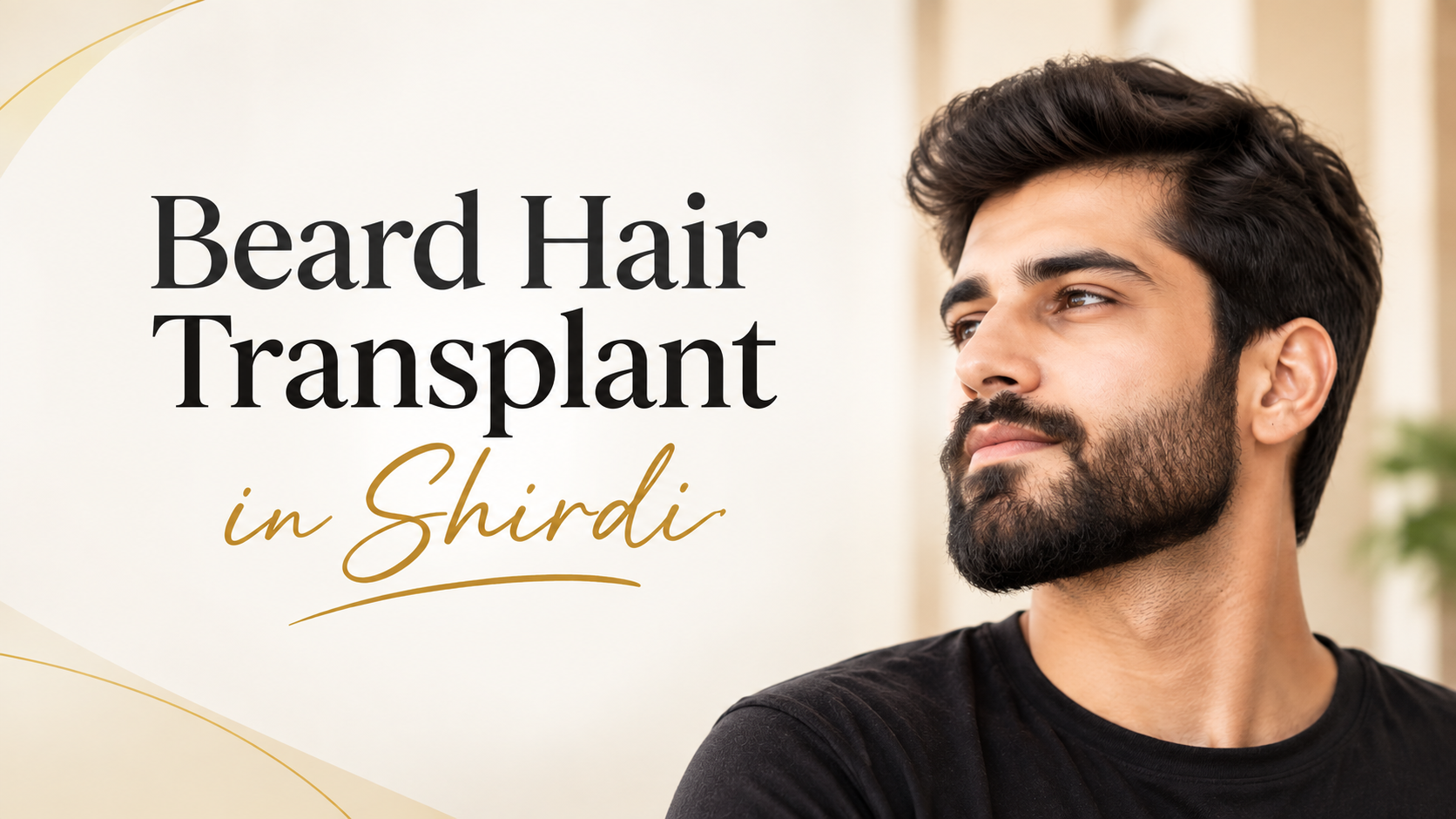
A well-defined beard can significantly influence facial appearance, but not everyone develops even or dense beard growth naturally. Genetics, hormonal factors, previous injuries, scars, and naturally sparse facial hair can contribute to patchy or uneven beard growth. For people looking for a long-term solution, a beard hair transplant can help restore hair in selected areas of the face.
At Clinique Internationale, Shirdi, beard restoration is offered with an individualised approach under the guidance of Dr. Pranay Thakur. The treatment involves carefully planning the beard design, selecting suitable donor follicles, and placing grafts to create natural-looking growth. Patients considering a beard hair transplant in Shirdi can first undergo a consultation to understand whether the procedure is appropriate for their facial hair concerns.
What Is a Beard Hair Transplant?
A beard hair transplant is a surgical hair restoration procedure in which healthy hair follicles are harvested from a suitable donor area and transplanted into areas of the beard that have insufficient growth. The transplanted follicles can then grow as facial hair over time.
Unlike temporary cosmetic solutions, transplantation aims to add actual hair follicles to areas with sparse growth. The number of grafts required depends on the existing beard density, desired coverage, facial structure, and the areas being treated.
People may consider this procedure for a thin moustache, patchy cheeks, an incomplete beard line, or areas affected by scars. A detailed assessment is important because every patient’s beard pattern and donor availability are different.
Why Beard Design Matters
A natural beard transplant involves more than simply adding a large number of grafts. The direction, angle, spacing, and placement of follicles all contribute to the final appearance.
The surgeon may assess the natural contours of the face before designing the treatment area. Particular attention is generally given to the moustache, cheek line, sideburns, chin, and jawline. The goal is to create a pattern that blends with existing facial hair rather than appearing artificially dense or uniform.
At Clinique Internationale, Dr. Pranay Thakur leads the Shirdi centre and provides hair restoration procedures with a focus on personalised treatment planning. Patients can discuss their desired beard shape and understand the realistic possibilities during consultation.
How the Procedure Is Planned
Before undergoing a beard hair transplant in Shirdi, the patient’s facial hair pattern and donor area are evaluated. The surgeon may determine how many grafts are required and which technique is appropriate for the planned restoration.
Techniques such as Follicular Unit Extraction (FUE) involve removing individual follicular units from the donor area before carefully placing them into the beard region. The placement process requires precision because facial hair grows at specific angles and directions.
The treatment plan can also depend on whether the patient wants partial filling of patchy areas or broader beard enhancement. Patients looking for information about the surgical approach can also review the hair transplant surgery in Shirdi page for additional information about available hair restoration techniques.
Who May Consider Beard Transplantation?
A beard transplant clinic Shirdi patients choose should first assess whether transplantation is suitable for their individual concerns. Candidates may include people with naturally sparse facial hair, uneven beard density, certain facial scars, or areas where beard growth is significantly reduced.
However, a consultation is important before deciding on treatment. The availability and quality of donor follicles, existing facial hair, skin condition, medical history, and expectations can all influence treatment planning.
It is also important to understand that results develop gradually. Transplanted follicles need time to settle and enter their normal growth cycle, so patients should follow the post-procedure instructions provided by their medical team.
Choosing a Beard Transplant Clinic in Shirdi
When researching a beard transplant clinic Shirdi, patients can consider factors such as the surgeon’s experience, treatment planning process, available techniques, clinic facilities, consultation process, and approach to follow-up care.
The specific treatment page for beard restoration at Clinique Internationale explains the procedure, techniques, expected considerations, and consultation process. Reviewing the beard hair transplant service in Shirdi can help patients understand the treatment before arranging a consultation.
A proper consultation also gives patients an opportunity to discuss their preferred beard shape, expected density, donor area, recovery, and the number of grafts that may be needed.
Recovery and Expected Growth
Recovery varies from person to person. Mild swelling, redness, sensitivity, or small crusts may occur around the treated areas during the initial recovery period. Following the surgeon’s instructions regarding washing, touching, shaving, and physical activity can help support proper healing.
The transplanted follicles do not produce an immediately finished beard. Growth takes place progressively, and patients should allow adequate time for the follicles to establish and mature. Regular follow-up can help the medical team monitor the healing and growth process.
Conclusion
A beard hair transplant can be considered by individuals who want to address sparse, patchy, or uneven facial hair with a long-term restoration approach. Careful beard design, appropriate donor selection, precise graft placement, and realistic expectations are important parts of the process.
At Clinique Internationale, Shirdi, Dr. Pranay Thakur provides hair restoration consultations for patients considering facial hair restoration. Anyone considering a beard hair transplant in Shirdi should undergo a personalised consultation to determine the appropriate treatment plan for their needs.
Frequently Asked Questions
1. Can a beard transplant help improve an uneven beard line?
Yes. Beard transplantation can be used to add hair to selected areas where the beard line appears uneven or lacks sufficient density.
2. Can beard transplant restore hair over facial scars?
In suitable cases, transplanted follicles may be placed around or over certain scars to improve the appearance of hairless areas. Suitability depends on the condition of the scar and surrounding skin.
3. Does the transplanted beard hair look natural?
When grafts are placed according to the natural direction and angle of facial hair growth, the result can blend with the patient’s existing beard.
4. Can I decide the shape of my beard before the procedure?
The preferred beard shape can be discussed during consultation. The surgeon evaluates facial proportions, existing growth, and donor availability before finalising the treatment design.
5. When can I resume normal activities after a beard transplant?
Recovery time varies depending on the individual and the extent of treatment. The medical team provides specific instructions regarding washing, shaving, exercise, and other activities during recovery.