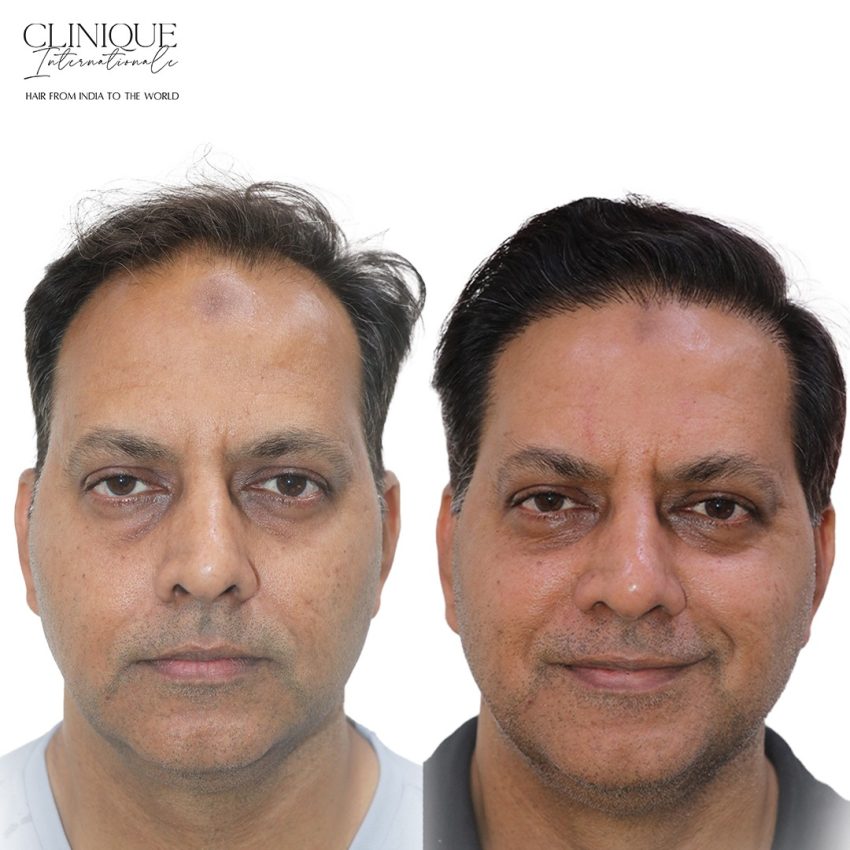
Siliguri connects travellers from Darjeeling, Kalimpong, Gangtok and the Dooars to major cities across India. For people experiencing a receding hairline, thinning crown or reduced hair density, exploring hair restoration often involves questions about treatment suitability, techniques, travel and realistic results. Patients considering a hair transplant in Siliguri may also need to plan their journey from Bagdogra Airport.
At Clinique Internationale, founded by Hair Transplant Surgeon Dr. Bhavesh Gupta in 2012, hair restoration planning begins with an assessment of your hair-loss pattern, donor hair availability, scalp condition, hairline preferences and personal goals. This helps determine whether Sapphire FUE or Direct Hair Implantation (DHI) may be suitable for your requirements.
Hair transplantation involves extracting healthy hair follicles from a donor area, usually the back or sides of the scalp, and placing them in areas affected by hair loss. The procedure may be considered for people experiencing hereditary hair loss, a receding hairline or thinning in the crown. However, suitability depends on individual factors, including the cause of hair loss and the availability of healthy donor follicles.
Patients searching for a hair transplant clinic near Siliguri can explore the available techniques, understand the preparation process and review treatment costs before planning their visit. A consultation helps clarify the procedure, expected recovery and follow-up requirements.
Treatments to Discuss
Clinique Internationale provides hair restoration options that can be discussed during an individual consultation. The recommended approach depends on the patient’s hair-loss pattern, donor supply, scalp condition and treatment goals.
- Sapphire FUE Hair Transplant
- Individual follicular units are extracted from the donor area.
- Sapphire blades are used to create recipient sites before graft placement.
- DHI Hair Transplant
- Extracted follicles are implanted using a specialised implantation device.
- Suitability depends on hair characteristics, donor availability and treatment requirements.
- Hairline Reconstruction
- Plans the shape, position and density of the frontal hairline.
- Considers facial proportions, existing hair growth and possible future hair loss.
- Crown Hair Restoration
- Addresses thinning or baldness around the crown.
- Graft placement considers the natural hair swirl, existing density and donor supply.
- Female Hair Transplant
- May be considered for women experiencing specific patterns of hair thinning.
- The underlying cause of hair loss and scalp condition must be assessed first.
- Corrective Hair Transplant
- Evaluates concerns following an earlier procedure, such as an unnatural hairline, limited coverage or scarring.
- Suitability depends on scalp condition, previous treatment and remaining donor hair.
Hair Transplant Preparation Checklist
Preparing for a hair transplant is important, particularly for patients travelling from Siliguri, Darjeeling or Sikkim. Follow the clinic’s specific instructions and discuss any medical concerns with the treating team before making changes to your routine.
Two Weeks Before the Procedure
- Share details of all medicines and supplements you take, especially blood thinners, with the treating doctor.
- Inform the team about existing medical conditions, including diabetes, allergies or previous surgical complications.
- Do not stop or change prescribed medicines unless your doctor advises you to do so.
- Reduce smoking and alcohol consumption as advised, since both may affect healing.
- Collect recent blood reports, medical records and details of previous hair-loss treatments.
- Plan sufficient time away from work and arrange a few quiet days for recovery.
Three Days Before the Procedure
- Avoid hair dye, chemical straightening or perming unless the clinic gives different instructions.
- Do not cut your hair yourself before the appointment.
- Pack button-up shirts, a loose cotton cap and a comfortable travel pillow.
- If you have advanced hair loss, ask the surgeon whether beard hair may be considered as an additional donor source.
Dr. Bhavesh Gupta’s team’s published case series on beard hair transplantation for advanced alopecia appeared in the Journal of Maxillofacial and Oral Surgery in 2021. The study discusses beard hair as a possible additional donor source in selected cases. Your surgeon will advise whether this approach is appropriate and provide any specific preparation instructions, including beard-length guidance.
The Night and Morning Before Surgery
- Wash your hair as instructed by the clinic and avoid applying oil, gel or wax.
- Get adequate sleep and avoid activities that may cause unnecessary stress or fatigue.
- Keep your identification documents, medical reports and medicine list together.
- Have breakfast on the morning of the procedure unless the clinic provides different instructions.
- Wear a loose, button-up shirt to avoid pulling clothing over the scalp after treatment.
What Happens at the Clinic?
The hair transplant process involves several stages, from the initial examination to post-procedure care. Understanding these steps can help patients prepare for treatment.
- Assessment: The doctor examines the donor area, scalp condition and hair-loss pattern, reviews your medical history and discusses your expectations.
- Hairline Design and Planning: The treatment plan considers facial proportions, existing hair, donor availability and the areas requiring coverage.
- Graft Extraction and Placement: Follicular units are extracted and placed using the selected technique. The procedure is generally performed under local anaesthesia, allowing patients to remain awake.
- Aftercare: The clinic provides instructions for scalp cleaning, protection, activity and follow-up. The supplied treatment information includes a first wash with PRP therapy after hair transplant on day two; confirm the exact schedule with the treating team. Temporary discomfort may occur during recovery.
- Follow-Up and Hair Growth: Hair growth develops gradually over several months. Follow-up appointments help monitor healing and progress, with the final outcome generally assessed around a year or later.
Hair Transplant Cost in Siliguri
The cost of a hair transplant depends on the number of grafts required, the technique selected, procedural complexity and the services included in the package.
According to the pricing details provided by Clinique Internationale:
| Treatment Package | Rate Per Graft |
| Classic – Sapphire FUE | ₹30 |
| Premium – Direct Implantation | ₹50 |
The packages include pre-operative tests, a PRP-supported wash and a three-month aftercare kit. An additional 5% GST applies.
For an estimated requirement of 2,150 grafts, the indicative costs are:
| Package | Total Cost Including GST |
| Classic – Sapphire FUE | ₹67,725 |
| Premium – Direct Implantation | ₹1,12,875 |
EMI options may be available to help patients manage the treatment expense. The final estimate depends on the assessment and confirmed graft requirement. Contact the clinic to verify current rates, package inclusions, GST and EMI terms before making a booking.
Travelling from Siliguri, Darjeeling and Sikkim
Patients travelling from Siliguri and nearby hill regions can enquire about treatment arrangements at Clinique Internationale’s branches in Navi Mumbai, Pune, Bengaluru and Shirdi. The main centre is located in Kharghar, Navi Mumbai, while the Bengaluru branch is in J. P. Nagar.
Bagdogra Airport offers flights to Mumbai and Bengaluru, including some direct connections depending on the schedule. Patients should compare flight availability and onward travel arrangements before selecting a treatment location.
People travelling from Darjeeling, Gangtok, Kalimpong, Jalpaiguri and Cooch Behar may need to plan additional road travel. The provided travel guidance recommends arriving a day before the appointment and allowing an extra day during the monsoon season because landslides and road conditions may affect journeys.
Before travelling, confirm the exact treatment branch, appointment schedule, in-person assessment requirements, pricing and follow-up arrangements. Patients should also ask the clinic how post-procedure reviews will be managed after returning home.
Results and Choosing the Right Hair Transplant Clinic
Hair transplant results vary depending on the patient’s hair-loss pattern, donor hair quality, graft placement and healing response. Reviewing documented results and patient experiences can help you understand the possible outcomes and limitations of treatment.
After the procedure, protecting the transplanted area and following the recommended aftercare routine are important. Depending on the cause of hair loss, the doctor may also discuss PRP therapy for hair loss or medical management to help address ongoing hair thinning in untreated areas.
When comparing a best hair transplant clinic in Siliguri or searching for a best hair transplant surgeon in Siliguri, consider the consultation process, treatment planning, surgeon involvement, package details and follow-up arrangements. Ask who designs the hairline, who performs the key stages of the procedure and what is included in the quoted cost.
A reliable treatment plan should explain the expected recovery, possible limitations and realistic outcomes rather than promise guaranteed results. Patients travelling from the hills should also make sure they have clear preparation instructions and a suitable follow-up plan.
Frequently Asked Questions
- What is the cost of a hair transplant for patients from Siliguri? The cost depends on graft count, technique and package inclusions. The provided rates start at ₹30 per graft for Classic Sapphire FUE and ₹50 per graft for Premium Direct Implantation. Contact the clinic to confirm current pricing and your individual estimate.
- Can everyone undergo Sapphire FUE? No. Suitability depends on the scalp condition, donor hair availability, hair-loss pattern, medical history and treatment goals. A consultation is required before choosing a technique.
- What is the difference between DHI and Sapphire FUE? Sapphire FUE uses sapphire blades to create recipient sites before graft placement. DHI uses a specialised implantation device to place extracted follicles. The appropriate technique depends on individual requirements and the surgeon’s assessment.
- How many grafts will I need? The number of grafts depends on the area requiring coverage, existing hair density and available donor supply. A clinical examination is needed to estimate the graft requirement.
- When will I see hair transplant results? Transplanted hair may shed temporarily during the initial weeks. New growth may begin over the following months, with results generally maturing around 12 months or later. Individual timelines vary.
- Can I enquire about a hair transplant without travelling from Siliguri? Yes. You can contact Clinique Internationale to ask about consultation availability, treatment locations, pricing, travel arrangements and follow-up requirements before planning your visit.
Book Your Personalised Hair Restoration Consultation
If you are considering a hair transplant in Siliguri, preparing in advance can make the consultation and travel process easier. Clinique Internationale can help you understand the available treatment approaches, compare Sapphire FUE and DHI, review graft requirements and discuss the expected recovery process.
Patients from Siliguri, Darjeeling and Sikkim can contact the clinic to confirm the treatment location, appointment availability, current package prices and follow-up arrangements. Discuss your hair restoration goals and take an informed first step towards planning your treatment.
Contact Information
Call Us: +91 90821 23009
Website: Clinique Internationale